

Free Consultations936-647-1540

How Do I Know if My DWI Stop Was Even Legal in Texas?
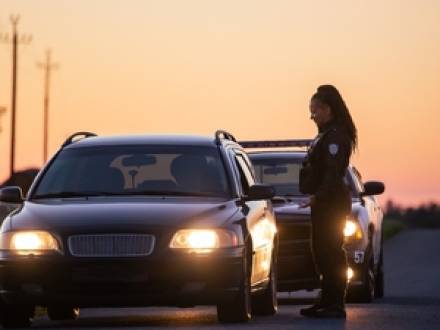 Your DWI stop was only legal if the officer had a real, specific reason to pull you over in the first place. This is called reasonable suspicion, and without it, everything that happened after the stop, including any field sobriety tests or breath results, may not hold up in court. Many people assume their case comes down entirely to a breath test number, but the legality of the stop itself often matters just as much. A Montgomery County DWI defense lawyer can review the details of your stop and tell you whether the officer had the legal grounds to pull you over.
What Makes a Traffic Stop Legal in Texas in 2026?
Under Texas law, an officer needs reasonable suspicion that a traffic violation or crime has occurred before pulling you over. This standard comes from the Fourth Amendment protection against unreasonable searches and seizures, and Texas courts apply it strictly in DWI cases. Reasonable suspicion is a lower bar than proof, but it still requires specific facts, not just a hunch or a guess. An officer can't legally stop you simply because it's late at night or because you're leaving a bar.
What Are Common Reasons Officers Give for a DWI Stop?
Officers typically point to one of several reasons when they pull someone over. These often include:
- Speeding or driving well under the speed limit
- Weaving within a lane or drifting over the center line
- A broken taillight, headlight, or license plate light
- Failing to signal a turn or lane change
- Rolling through a stop sign or red light
Under Section 545.104 of the Texas Transportation Code, drivers are required to signal before changing lanes or turning. Violations of traffic code sections like this one are common reasons officers cite for a stop. Whether the violation actually happened, and whether the officer's report matches available video footage, can become a central issue in your case.
Can Weaving Alone Justify a DWI Stop?
Texas courts have found that a single instance of weaving within your own lane isn't necessarily enough to justify a stop on its own, since minor lane movement can happen for a lot of reasons that have nothing to do with alcohol. Courts tend to look at the overall pattern of driving, not just one moment. If the officer's stated reason for pulling you over doesn't match what dashcam footage actually shows, that mismatch can become an important part of challenging the stop.
Can You Challenge the Legality of Your DWI Stop in Court?
If your attorney believes the officer lacked reasonable suspicion, they can file a motion to suppress evidence collected during the stop. This asks the court to throw out anything gathered afterward, including field sobriety test results, breath test results, and statements you made to the officer. If the judge agrees the stop was illegal, the prosecution may be left with little or no evidence to support the DWI charge, which can significantly change how the case moves forward.
What Evidence Helps Show A Stop Was Illegal?
Building this kind of challenge usually depends on comparing several sources of information. Useful evidence often includes:
- Dashcam and body camera footage from the stop
- The officer's written report and stated reason for the stop
- Radio or dispatch records showing when and why the stop began
- Witness statements from passengers or nearby drivers
Small inconsistencies between an officer's report and the video footage can carry real weight, since they raise doubt about whether the stated reason for the stop actually matches what happened.
Schedule a Free Consultation With Our Conroe, TX DWI Defense Attorneys
Facing a DWI charge is stressful enough without wondering whether the stop that led to it was even legal in the first place. At Pullan & Young, we know that a strong defense often starts well before any breath test, back at the moment the lights first came on behind you.
Attorney Tracy McNeill Pullan was formerly an Assistant District Attorney, and Attorney Corey Young is a former prosecutor. Their combined experience on the other side of these cases gives them a clear understanding of how officers build a DWI case and where those cases tend to fall apart.
Contact Pullan & Young at 936-647-1540 to talk to our Montgomery County DWI defense lawyers today.
Questions? We Are Here to Help.
Fill out our contact form below or give our team a call at 936-647-1540.
 The use of the Internet or this form for communication with the firm or any individual member of the firm does not establish an attorney-client relationship. Confidential or time-sensitive information should not be sent through this form.
I have read and understand the Disclaimer and Privacy Policy.
Office Location


From our office in Conroe, Texas, we provide representation for clients in communities throughout Montgomery County, including Magnolia, Pinehurst, Montgomery, Panorama Village, Willis, Splendora, Patton Village, New Caney, Porter, and The Woodlands, as well as other areas surrounding Houston, including Spring, Katy, Richmond, Friendswood, Galveston, Harris County, Fort Bend County, and Galveston County. We also represent clients throughout the state of Texas, including San Antonio and Bexar County, San Marcos and Hays County, Austin and Travis County, Georgetown and Williamson County, Dallas and Dallas County, Waco, El Paso, Corpus Christi, Abilene, Temple-Killeen, Forth Worth, Midland-Odessa, Lubbock, Tyler, and Tarrant County, and Denton and Denton County.
*Our firm does not handle ICE cases or federal detention cases.
Results listed are not a guarantee or indication of future case results.
908 N San Jacinto St., Conroe, TX 77301
936-647-1540